Introduction
There are two kinds of approach to experiencing the high mountains – one offers a window to the view from a dinner plate size aperture, twenty minutes from takeoff on a helicopter tour. This other kind requires a pack and some boots and a willingness to gain the same views over days or weeks. Both offer spectacular panoramas. What differs are all the other elements of the journey.
If you’re considering spending your vacation on a helicopter or on a trek, in the Himalaya, Alps or other mountainous region, this guide should help explain the tradeoffs of cost, time, fitness, safety, impact and other considerations. In the end, there is no better option – there is only the option better for your particular circumstances.
The Core Trade-Off, In One Sentence
A helicopter tour trades depth for efficiency; a trek trades efficiency for depth. Everything else in this guide is an elaboration on this theme.
What a Helicopter Tour Looks Like?
Helicopter tours of mountains have become increasingly popular in recent years, particularly in Nepal, where an Everest Base Camp heli-tour can make a 12-14 day trek a 2-day experience. Trips generally involve a morning departure from a regional airport or from a private villa/hotel, a fly-over of the ridgelines or foothills while waiting for a break in the weather, a landing in the target area (or multiple landings), and return to the point of origin for lunch the same day.
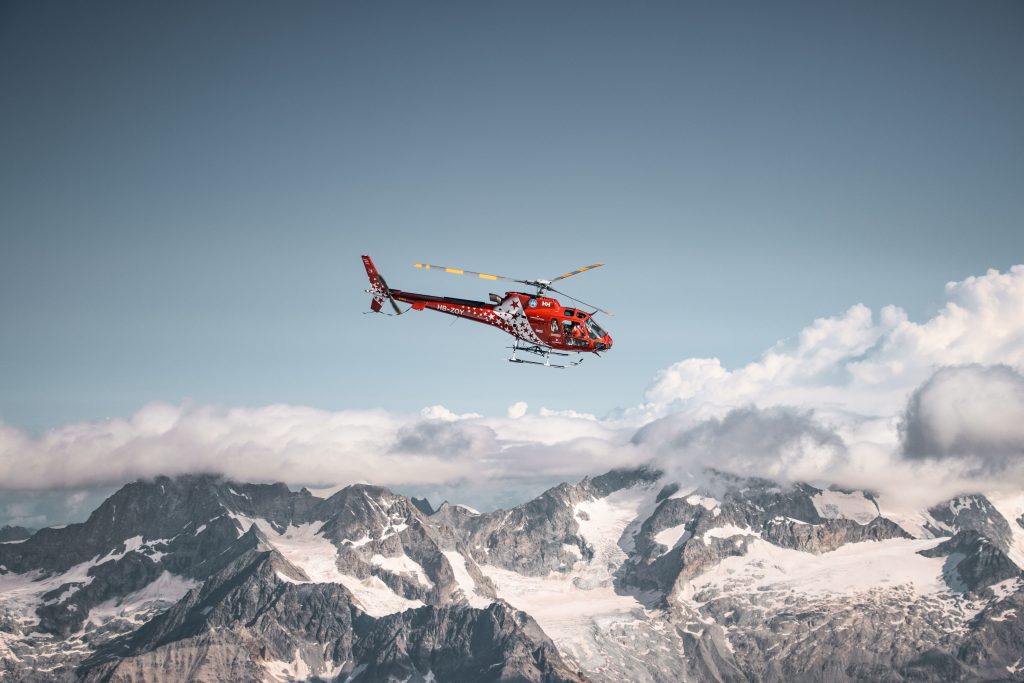
The appeal of such tours is obvious. They offer the same spectacular views as a trek without the time investment. Some travelers find the view inaccessible otherwise, due to a tight itinerary, physical limitations or other factors. There are few downsides to helicopter tours for the right traveler.
Pros of Helicopter Tours
Time
This benefit speaks for itself. A several-week long trek becomes a day or two. Time spent sightseeing is time not spent seeing other things, but for many travelers, a multi-day trek is incompatible with other aspects of a longer trip. A helicopter tour lets you see the mountains, and have time to do other things as well.
Accessibilty
Age, reduced physical ability, altitude sickness and other factors may make a trek impractical or impossible for some travelers. Helicopter tours let everybody see the view.
Altitude without acclimatization
Most treks to great altitudes involve spending several days at intermediate camps to allow the body to adjust to the lower oxygen levels at higher elevations. A helicopter tour involves far less time at any given altitude (often measured in hours) and lets you enjoy the views without acclimatizing. It should be noted that this factor has its own risks, discussed below.
Unique perspectives
Looking at mountains from above has an entirely different feel than looking at them from below. While a trek lets you follow the contours of the ridgelines and valleys, a helicopter tour offers a broader perspective, showing geography in a way that few people (save astronauts) usually see. Shots from a helicopter window make for incredible photos that no trekker would be able to capture on his or her own.
Flexible schedules
Trekking itineraries are generally quite rigid, and set months in advance. Helicopter tours offer the potential for more flexibility, if your travel plans are limited by time or other considerations. It should also be noted that helicopter tours are subject to cancellation as well, sometimes with little notice, due to weather conditions.
Comfort
No blisters, knee pain, bad accommodations, or bad food. You get to see the scenery without the discomfort of a trek. The only downside is that it’s really not the same experience.
Cons of Helicopter Tours
Cost
Cost is always a consideration for any kind of travel, and helicopter tours represent an extreme. A tour to Everest Base Camp in Nepal, for instance, costs several times what a comparable multi-day trek would. You pay for the fuel, the pilots, the upkeep on the helicopters, and an extremely specialized operation that only happens on specific days as dictated by the weather.
Brevity
You get to see the mountain for a short while. Perhaps twenty or thirty minutes on the ground, at best. Most people who take helicopter tours note a certain degree of disappointment, as the view is so amazing but gone so quickly that it’s almost like a dream.
Weather & cancellations
Weather is a huge factor in mountain tourism, and plays a role in both trekking and helicopter tours. Helicopter tours, however, are far more sensitive to bad weather and offer far less flexibility in terms of rescheduling once a trip is booked. They are also subject to cancellation at short notice, often due to weather, with no refund.
Altitude sickness
A rapid ascent to high altitude in a helicopter tour, without the gradual acclimatization of a trek, may put some travelers at greater risk of altitude sickness (HACE/HAPE). For more information on high altitude risks and how to mitigate them, see the relevant Trekking section below.
Environmental impact
Helicopter tours represent a significant source of noise pollution in areas that were previously silent and pristine. This has led to several local objections in the Himalaya and other regions to both rescue and pleasure flights. In some cases, local governments have responded by restricting helicopter traffic.
Less authentic experience
There are few encounters with local people, culture or geography on a helicopter tour besides the view. This is part of the appeal for some travelers, but many who take helicopter tours find themselves longing for the cultural experiences that a trek might provide.
It’s a spectacle, not an accomplishment
For some, a helicopter tour simply isn’t as satisfying as a self-guided or guided trek. It doesn’t present the same sense of personal achievement or reward. Nobody trained for this.
What Trekking Looks Like?
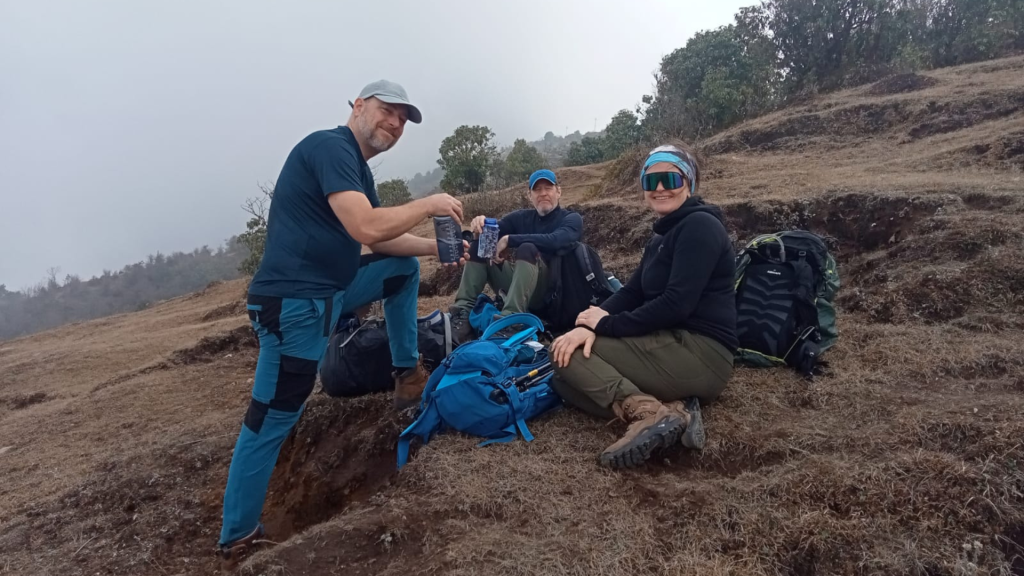
Trekking at a reasonable pace involves walking 2-4 km/hour, gaining altitude steadily over days, and spending nights at progressively higher camps (or guesthouses, in the case of the Himalaya). A trek is an experience that unfolds steadily over several days, involving hundreds of smaller experiences. It involves the first glimpse of a high mountain peak through the clouds, and the crossing of a glacial river on a rope bridge. It involves meeting other trekkers on the trail and sharing meals and tea with people from another country. It involves eating soup that somehow tastes amazing after 8 hours of walking. It is not a single experience, but many.
Pros of Trekking
Depth of Experience
You don’t just see the mountain – you watch it approach steadily over days, see it from many sides, and realize that this one location offers a thousand smaller, equally rewarding ones. You see the landscape change with the seasons and altitudes and feel a deep satisfaction with the journey. You are rewarded more richly for the effort, and this reward is more lasting than a short helicopter tour.
Cost
Trekking, as an activity, is far cheaper (per day) than a helicopter tour, and there are ways to make it even cheaper. Local guides and accommodations, when compared to Western-run operations, are often far more affordable, and a mid-range trekking budget is often comparable to a single day of a helicopter tour.
Fitness and health benefits
Multi-day, multi-day hiking has its own rewards, in terms of physical and mental health benefits. This applies to both the trek itself and the rewards at the end. For some people, the trail is as much a part of the experience as the destination.
Reduced altitude sickness risk
A steady, measured ascent to a high altitude destination with built in rest days is the best possible way to acclimatize to higher elevations. See the relevant section in the helicopter tour section for more details.
Authentic experience
Trekking offers cultural immersion in a way that few vacations do. You pass through villages, monasteries, farmlands and guesthouses, and experience the local culture and daily life. You support the local economy with every meal and cup of tea. You gain insight not only on the natural beauty of the area, but on its people and customs. This is one of the strongest draw for many trekkers, and an incredibly valuable experience that few other vacation types offer. Another benefit is that you are more likely to meet other trekkers on the trail, and form friendships (or even romantic relationships!) that might last well beyond the end of the trip.
Sense of accomplishment
Finishing a multi-day trek is a major accomplishment for many people, and one that they often carry well beyond the end of the trip. It serves as a personal challenge overcome and an experience lived. It offers a feeling of pride and often increased confidence that can last long after the final day.
Lower carbon footprint & reduced noise pollution, compared to helicopter travel.
Cons of Trekking
Time
This is the defining limitation of trekking as an activity, and the factor that determines the experience of a trip. While a helicopter tour to a remote Himalayan village is a half day, a trek involves at least a week of walking, and often two, to get there. Time is a major limitation for most people on vacation, and few have the luxury to spare a month for a multi-day Himalayan trek. This is why helicopter tours and other types of short trips are far more common.
Physical limitations
Trekking at altitude, for 6-8 hours per day, is physically taxing. It requires a certain degree of personal fitness, and can be incredibly challenging for many people. Attempting to trek beyond your personal limits is extremely dangerous, but limiting yourself to your abilities is the only safe option.
Altitude sickness risk
While altitude sickness is fairly rare on most treks, a sudden onset at the wrong time can ruin a trip and potentially put a traveler’s life at risk. It is critical to understand the risks and symptoms of altitude sickness and how to combat them.
Discomfort
Most treks involve some personal discomfort, whether it be blisters, sore muscles, bad food, or cold, uncomfortable accommodations. It is a far cry from the comforts of home, and many people who try a multi-day trek quickly realize that it is not the vacation they expected.
Gear and preparation
A trek requires gear and preparation in advance of departure. You can’t just show up a day before, the way you might for a helicopter tour or a guided day-hike. You need boots, warm clothing and a sleeping bag that won’t leave you freezing at night. You need to train beforehand.
Evacuation
Sprained ankles and bouts of altitude sickness are not uncommon on multi-day treks, and they can happen when you least expect them – hundreds of kilometers from the nearest hospital. They can be incredibly expensive to treat and, for severe cases (HAPE/HACE), potentially life threatening. Evacuation by helicopter (some companies offer this as an add-on) can be tremendously expensive without the right travel insurance.
Crowds
Multi-day treks in popular ranges are often subject to overcrowding at certain points, especially during peak season. This leads to more congestion at trailheads, more stress on local accommodations and water supplies, and more trash overall. It is an unfortunate consequence of popularity and one that some trekkers find incredibly frustrating.
Cost Comparison at a Glance
While exact costs fluctuate depending on the region and time of year, here’s a rough guideline to give you an idea of the differences. Prices for a short heli tour are usually a single, expensive fee that covers just a few hours. Multi-day treks usually have a much more affordable, hourly fee, but the price adds up quickly over one to three weeks. Your overall cost of a multi-day guided trek and a shorter helicopter tour will be fairly similar depending on what region you visit, what season you go to, how many hours or days you need and what extras you choose to include. Independent, low-budget treks without guides or porters and in cheaper, off-season months can also end up lower than guided treks and helicopter tours. And while both require money, time, and planning, a helicopter tour should be considered a short, expensive getaway while a trek should be seen as a longer but overall more affordable experience in addition to the sights. It’s worth noting that either option can be chosen for its own sake, depending on the region and type of experience you’re looking for. However, there are certain considerations each traveler should keep in mind based on their own budget, personal preferences, and goals for travel.
Safety: A More Nuanced Comparison Than It First Seems
The comparison between the relative safety of the two options is not as simple as one might think
Although a helicopter tour is generally seen as a safer alternative to a multi-day trek, this is far from always the case.
Because of the unique challenges posed by high altitudes, helicopter crashes are relatively common in mountain environments, making altitude an unpredictable danger for any helicopter tour. Dangerous weather conditions, reduced engine power at high altitudes, and difficult terrain also contribute to the challenges of helicopter travel. While accidents are rare, they certainly do happen, and helicopters are used for search-and-rescue operations in the mountains on a regular basis.
Meanwhile, the dangers of trekking are more varied and cumulative: altitude, the physical strain of the trek itself, potential weather issues, and dangerous terrain like crossing rivers or slippery inclines all combine to make trekking a serious and potentially deadly activity. However, compared to the dangers of a helicopter tour, the dangers of trekking are generally predictable and avoidable when proper planning and precautions are taken. A competent guide and extra time for acclimating altitude sickness can help tremendously for a trek, but they only help – there’s no avoiding the physical challenge and slow pace of a multi-day trek. Neither of the two activities is completely risk-free, but the overall risks are decreased for both in the right conditions, with proper precautions and thorough planning. Regardless of the activity, comprehensive travel insurance that covers helicopter evacuation, if applicable, is always strongly recommended.
Environmental and Ethical Considerations
This is a category where the two activities are fundamentally different, and one is much more sustainable and responsible than the other, although it may not be as important for some travelers
Helicopter tours consume massive amounts of fuel per passenger and can seriously disrupt the fragile ecology of the environment they’re invading. Due to an uptick in helicopter tourism in recent years, there has been an issue in several mountainous regions about the disruption of local tourism and ecology by commercial helicopter tours. While there is a legitimate need for helicopter tourism and rescue operations, many local residents and conservation groups complain about helicopter tours interfering in wildlife and adding noise pollution to an otherwise quiet environment. Some local trekking guides and conservation groups have also complained about the “snobbish” attitude towards local people that rich tourists on helicopter tours may exhibit, despite local guides and porters being necessary for almost any trekking tour as well as the fact that helicopter tours also contribute to air pollution.
Trekking obviously has a much smaller footprint than helicopter tours, but it’s not without its issues. Popular trekking areas suffer from pollution, the overuse of local resources like firewood in some cases, and an overall disruption of the local ecology due to the sheer number of people and animals present at once. Fortunately, there are steps that backpackers can take to mitigate these problems, including traveling in designated areas only, using local accommodations like teahouses whenever possible, and avoiding peak seasons if possible. Unfortunately for helicopter tours, the only way to reduce their impact is to take fewer trips. Another major difference is that trekking has a much more lasting positive economic impact on local regions than helicopter tours do. While both activities are beneficial to a degree, local economies benefit much more from trekking due to the need for guides, porters, and teahouse stays for trekkers compared to helicopter tours, which only directly benefit the tour company and pilot.
Who Should Choose a Helicopter Tour?
- Travelers with limited time who only have a day or two to spend in the area and would prefer a brief but spectacular tour
- Individuals for whom trekking would be too physically taxing, limiting, or dangerous due to injuries, illnesses, or other factors
- People who prefer to save their energy for the views rather than put in the effort of trekking for days
- Photographers seeking aerial compositions that can only be captured from above
- Travelers who want to do both a helicopter tour and a short trek, but don’t have the time for a long trek
- Individuals who have done a trek before and want to return for a different kind of mountain experience
Who Should Choose Trekking?
- Travelers who want the long journey leading up to the destination rather than the destination itself
- People with plenty of time and the determination and fitness level to make a trek last for a few weeks
- Individuals who want a greater cultural experience and interaction with the local region rather than a quick getaway
- Budget-conscious travelers willing to put in the effort of a multi-day trek rather than pay for a guided tour
- People who want to properly acclimatize rather than risk altitude sickness
- Those who seek a greater sense of accomplishment and adventure
- Individuals who want to meet and socialize with other hikers and guides
The Hybrid Option
It’s important to note that the two activities aren’t necessarily mutually exclusive options, and many people choose to do both
A popular option that many people consider is a “trek in and helicopter out” or the other way around option. Rather than hiking up and then hiking all the way back down, a helicopter tour on the way back can save time on the return leg and let you enjoy a faster, easier return journey. Another advantage to this is that it serves as an emergency option if the physical toll of the trek becomes too much on the way back to spoil the experience of the journey up. This is also a good option if you want the experience of a full trek but only have a limited amount of time to see the region – it provides most of the benefits of a more expensive, time-consuming full trek without most of the drawbacks. If you think this option would be right for you, it’s definitely worth researching in relation to your specific region.
What to Pack (and Prepare) for Each?
The two activities don’t have much overlap when it comes to gear, which is another useful reminder as to how fundamentally different they are:
For a helicopter tour, the main preparations are reasonably simple: bring along warm clothing in case of cold temperatures at the tour site (which can happen even at a short tour), sunglasses, a headdress that won’t fly away, and fully charged cameras or phones. Additionally, if you plan on touring at extremely high altitudes, be aware of potential altitude sickness risks even at short tours for people especially prone to it. Some helicopter tour companies may advise against high altitude tours for people with heart or lung conditions, so it’s essential to research and consult a medical professional if you have any concerns beforehand. Aside from that, there really isn’t much else: you arrive, you tour, and you leave. The tour takes care of most of the necessary preparations for you
Meanwhile, there’s quite a lot to prepare for a trek – most notably, suitable clothing and equipment.
Well-used hiking boots, a sleeping bag suitable for the season and altitude, warm clothing, trekking sticks, a headlamp, water purification methods, first aid supplies, altitude sickness medication if needed, and a daypack with the supplies you’ll need on the trail every day (in addition to what your porter or pack animal will be carrying for you) are some essentials to consider. It’s also a good idea to at least maintain a reasonable level of fitness before the trek, though a serious trek for unprepared or out-of-shape individuals can be extremely taxing. Most guides will recommend regular, strenuous exercise and some hill training at the very least for a trek above 3500-4000 meters as a minimum. Overall, preparation for a trek is far more involved and requires more effort and planning than a helicopter tour would, and the higher altitude the trek is, the more challenging it will be in addition to being potentially dangerous.
Frequently Asked Questions
Is it possible to do both a tour and a trek during my travels?
Yes, it’s entirely possible to do both, and many people choose to do so. A short tour viewing a different point of interest than the one you hiked to, before or after your trek, is a great way to see more without spending extra time doing another full trek
Isn’t a helicopter tour cheating if I want to have the accomplishment of trekking to the area?
It really depends on what you want out of the experience, but it’s worth being honest with yourself before choosing one over the other. If you value the sense of “earning” the view and the physical challenge and accomplishment of reaching the destination, a helicopter tour will provide neither, although it can still be a worthwhile and spectacular experience nonetheless. If the view and experience are what matter to you, there’s no shame in a helicopter tour at all
What are the advantages of each activity for photography?
When it comes to unique photography opportunities, a helicopter tour will give you unparalleled views of the landscape from above.
For a trek, the advantages lie in the ground-level shots that are inaccessible to anyone without a helicopter or drone. It’s also worth noting that a trek gives more opportunities for portraits and capturing the beauty of the local culture, especially if you spend more time in one area rather than rushing between viewpoints. Serious photographers will have to consider both options for unique opportunities, although a trek can provide more varied and interesting shots in certain cases.
What are the implications of bad weather for each activity?
Helicopter tours are generally cancelled or postponed in bad weather, due to the danger presented to the passengers. In many cases, it can be impossible to tour in bad weather conditions, so it’s important to plan and book your tour accordingly. For a trek, bad weather is generally inconvenient but rarely outright cancelled due to the relative danger presented. On the other hand, severe weather can halt a trek entirely, especially if there are dangerous conditions like snowstorms blocking passes. It’s important to always build in buffer days in case bad weather cancels part of your tour, but this is especially important in the case of a helicopter tour.
Do I need travel insurance for either of these activities?
Yes, you should always have travel insurance for either one, although it’s worth noting that standard travel insurance does not usually cover high-altitude trekking or helicopter tours. If you do not have travel insurance, it’s best to check what exclusions and restrictions, if any, apply to high-altitude trekking or helicopter tours for the region you’re visiting.
Is one activity more “authentic” than the other?
It really depends on what you mean by “authentic”. A trek generally exposes you to more local culture and customs, which many consider to be more authentic, but a helicopter tour is no less authentic in terms of the landscape you’re seeing. In general, a helicopter tour is a quicker, more convenient way to see the same natural beauty that a trekker would see on a multi-day journey.
Final Thoughts
Neither activity is objectively better than the other – they’re simply different options that better suit different people. A helicopter tour is an excellent option for people who either don’t have the time, the physical ability, or the desire to do a multi-day trek but still want to enjoy the breathtaking views of a high altitude mountain region and get the satisfaction of earning it with a short but challenging tour. Meanwhile, a trek is the preferred choice for people who have the time and energy to invest in a multi-day adventure but want to earn their reward with an unforgettable, unique experience in a spectacular region that few have had the opportunity to see firsthand. These are only general guidelines, however, and it’s best to base your decision on the unique circumstances of your travels. If you still can’t decide which activity is better for you, you can even consider combining the two as mentioned earlier.