Trip Info
-
Private vehicles and domestic flights.
-
Flexible, ranging from solo to large groups.
-
5,930 meters at Ramdung Peak.
-
Hotels in Kathmandu and teahouses during the trek.
-
Moderate to high physical fitness required.
-
Tribhuvan International Airport, Kathmandu.
-
Tribhuvan International Airport, Kathmandu.
-
Spring (March-May) and Autumn (September-November).
-
Professional licensed guides and Sherpa support.
-
Guided trek with cultural exploration.
-
English
-
Full board during the trek (breakfast, lunch, dinner).
-
TIMS card and special trekking permits.
Overview
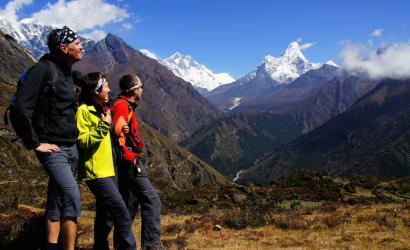
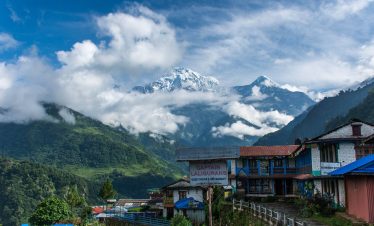
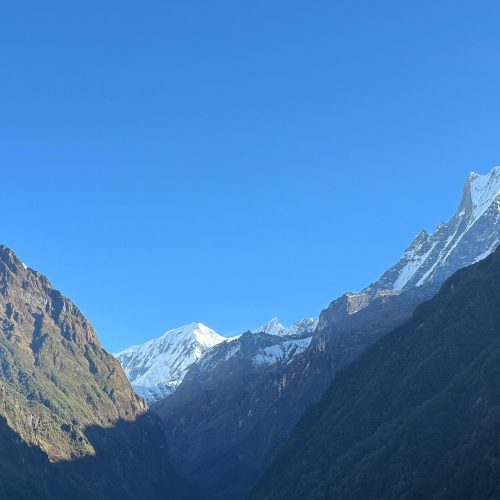
The Rolwaling Trek via Tashi Lapcha Pass is a challenging and rewarding expedition that takes adventurers to an incredible altitude of 5,700 meters. The trek offers captivating views of the picturesque Rolwaling Valley and the towering Mount Gaurishankar, providing an experience akin to stepping into a natural masterpiece.
This trek traverses two stunning valleys, the tranquil Rolwaling Valley and the renowned Khumbu Valley, each brimming with unique charm. The exhilarating crossing of the Tashi Lapcha Pass, a high-altitude mountain pass, adds a thrilling edge to the journey.
Venturing through the remote eastern region of Nepal, this trek unveils the unspoiled beauty of a pristine countryside. The area is a slice of paradise, untouched and raw, embodying nature’s grandeur in its purest form.
The Rolwaling Trek is not just about scenic beauty but also about the sense of accomplishment that comes with overcoming the challenges posed by its rugged trails and high passes. Camping under the starlit Himalayan skies further enriches the experience, making it a dream for adventure seekers.
This trek offers the chance to experience diverse cultural encounters. The trail passes through villages inhabited by Sherpas and other ethnic communities, providing insights into their lifestyle, traditions, and hospitality.
The majestic Mount Gaurishankar stands as a guardian throughout the trek, creating awe-inspiring moments as you journey through its shadow. The rolling landscapes, adorned with glacial rivers and alpine meadows, make every step unforgettable.
Crossing the Tashi Lapcha Pass is a major highlight, demanding physical endurance and mental resilience. It rewards trekkers with breathtaking views of the surrounding peaks and an unmatched sense of adventure.
Ultimately, the Rolwaling Trek via Tashi Lapcha Pass is a blend of natural splendor, cultural richness, and adventurous spirit, offering an experience that leaves a lasting impression on every trekker.
Highlights
- Trek to the maximum height of 5,700 meters above sea level.
- Witness the stunning landscapes of the Rolwaling and Khumbu valleys.
- Experience the thrill of crossing the Tashi Lapcha Pass.
- Explore the pristine and remote Rolwaling Valley in Eastern Nepal.
- Enjoy breathtaking views of Mount Gaurishankar.
- Immerse yourself in the unspoiled natural beauty and rugged countryside.
- Relish the unique mix of challenging trekking and serene camping experiences.
- Discover the slice of heaven offered by Nepal’s raw and natural setting.
Langtang Ri Trekking & Expedition representative will greet you in an airport & transfer you to your Hotel, after refreshment you will be picked from hotel lobby to office where you will be formally introduced to your Guide and the activities to be enjoyed over the next few days. We will also ask for your passport photographs and any other details required for your trek permits, at this stage.
After breakfast, we start an interesting tour around Kathmandu. Escorting by an English speaking guide be, try to give them a full taste of our vivid culture image and an enchanting manner of its people. In our sightseeing tour we go to Monkey temple Swayambhunath, Pashupatinath and Kathmandu Durbar square.
Pashupatinath: Hindu Temple is a very large and complex and focal point for the Hindu religion. This old and very revered complex of buildings and shrines is dedicated to the Lord Shiva, one of the main deities of Hinduism. While Lord Shiva has multiple forms he is often seen as the destroyer. This has great significance for the Pashupatinath temple as it is the site of many Hindi ritual cremations each day. Pashupatinath is considered by Hindus to be an auspicious site for passing from one stage of life to the next through the purifying and destroying flames of cremation. However, on a happier note, visitors may also get to see the temple in a buoyant festival mode with one of the many Hindu festivals celebrated here through the year.
Swayambhunath: You will first visit the Swayambhunath temple complex that sits atop a high hill overlooking Kathmandu and the entire Kathmandu Valley. Swayambhunath is perhaps the most sacred Buddhist pilgrimage site in Nepal. It consists of a very large white stupa with the all-seeing-eye of Lord Buddha plus many small stupa and beautifully carved stone shrines. This is a wonderful place to catch your breath and start to understand and appreciate the deep importance of Buddhist belief to the people of Nepal and the Himalaya region. Make sure you ring the many bells to awaken the gods and let them know you are in Nepal. Take the time to enjoy the view over Kathmandu and have your guide point the many other highlights of the city. In the far distance to the east you may also be able to see the hills of Nagarkot where your hotel for tonight is located. If you feel energetic you might also like to try some or all of the 350 steps that lead all the way from Kathmandu city up to your Swayambhunath temple vantage point.
Kathmandu Durbar Square: The next stop today is the beautiful Kathmandu Durbar Square, or the royal palace square of the ancient Malla kings of the Kathmandu Valley. This square and all its architectural treasures are a UNESCO World Heritage Site. While some damage to buildings occurred in the 2015 earthquake the site still contains many stunning architectural gems. The original royal palace courtyards are open to visitors and you will marvel at the intricate timber carving and beautifully crafted brickwork of the palace. The open square outside the palace has many beautiful multi-storey pagodas and temples with ornate carving and carpentry artwork that tells some of the story of the ancient kings and their mystical time and beliefs. The square also contains many important Hindu temples and statues such as to Vishnu and Lord Shiva. Durbar Square also contains the unique and intriguing Kumari Chok. This is an ancient and ornate house where resides the Raj Kumari – the Living Goddess. She is a young girl chosen through an ancient and mystical selection process to become the human incarnation of the Hindu mother goddess, Durga. If you are in the courtyard of the home at the right time in the afternoon you may see a brief glimpse of the Goddess at her window.
Drive from Kathmandu (1350 meters) to Gangor passing Dolakha that consumes about 9 hours time to reach the Gangor which is the starting point of our trekking.
Trek from Gangor to Simigaon (2020m) which takes about 7 to 8 hours. The first part of your trails follows normally flat path, then it ascends and descends through the jungle. Several places, you cross through suspension bridge. There are numerous villages on your way. You can find small teashops and local shops at some of the places. Steeply climb up to Simigaon, a village inhabited by Buddhist and few Hindus.
Trek from Simigaon to Daldung La (3976m) and it takes about 6 to 7 hours. On the route you come across the Sherpa Village. The uphill trek is rich in different varieties of plants and Rhododendron trees. After the uphill trek. You will now come across the easy path with ascending and descending paths while enjoying the scenic beauty of the place. If it happens to be happens to be a season you will witness the Yak Naka a temporary Yak shed specially for the preparation of cheese and butter
Trek Daldung La to Beding (3690m) The trek now ascends uphill through different varieties of plants and Rhododendron tree. You trek over the suspension bridges over the deep gorges in few places making the trek even more enchanting. You finally reach Beding which is a big Sherpa village.
Rest day at Beding for acclimatization. You can hike in and around for acclimatization and have a panoramic view of mountains like Mt. Gauri Shanker, Tibetan mountains of the Tibetan boarder.
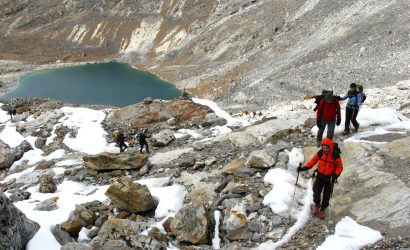
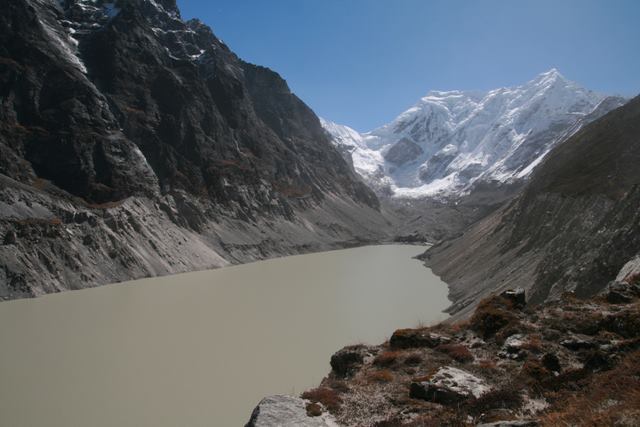
Trek Beding to Na (4180m) A day for exploring the upper slopes of the valley for Snow Partridge or a visit to the nearby glacier lake. The trek path slightly ascends along the river bank. The place is an open path with fresh air and the charming sound of the river. You can have the panoramic view of the mountains as the trek moves forward. You will also come across the Sherpa village having their own specialties.
Rest Day at Na for preparation for Ramdung Go (5930m) You will be able to witness the various views of mountains like Gauri Shanker, Menlung, Yalung and the mountains of the Tibet. You will be on a Yalung Glacier camp today.
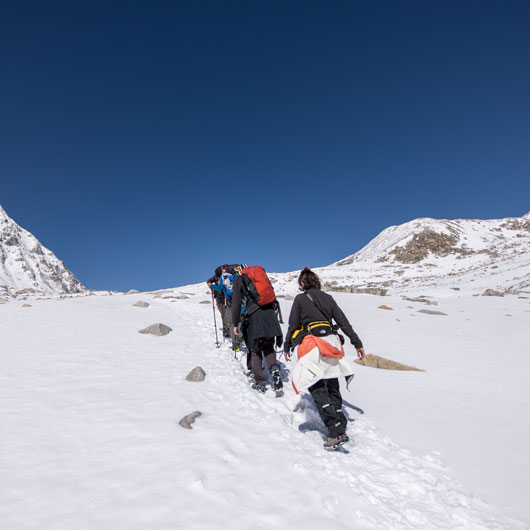
Trek Na (4180m.) to Yalung Glacier (4750m) The trek ascends high glacier walk with the land enriched with white ice all over with crampon and ice sacks. You will be staying overnight in the Yalung Glacier high camp.
Trek Yalung Glacier to Romdongla Bhanjyang (5930m). You will ascend a climb to Camp II. You will be able to witness the various views of mountains like Gauri Shanker, Menlung, Yalung and the mountains of the Tibet.
Romdongla Banjyang to Ramdong Peak Summit. You will descend from Ramdong Summit to Yalung High camp.
Trek to Na. The trial descends down back to Na, you will be able to enjoy the scenic beauty of the environment.
Trek to Na. The trial descends down back to Na, you will be able to enjoy the scenic beauty of the environment.
Trek Tso Rolpa to Trakarding Glacier (4800m). Early morning you will walk through the glaciers throughout the day and will be able to experience the new enchanting beauties that would add extra dimensions into your trial.
Trek from Trakarding Glacier to Tashi Lapcha Pedi Camp (5755m). The trail will still be ascending through some rock climbing and a gradual walk on the glacier. You will camp into Tashi Lapcha Pedi Camp today.
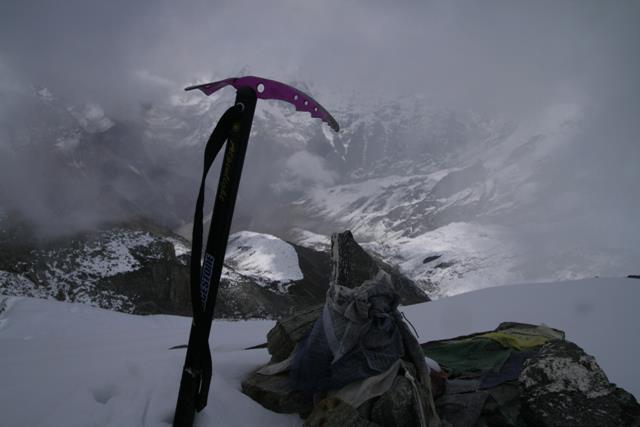
Climb from Tashi Lapcha Pedi to Tashi Lapcha Pass (5755m) to Tashi Cape. You will climb up the Tashi Lapcha Pedi and cross the Tashi Lapcha Pass through Tashi Cape.
Trek from Tashi Cape to Thyomgbo ( 4350m). Today you will be experiencing a bit easy glacier walking. The trail descends down towards Thyomgbo.
Trek Thyomgbo to Thame (3820m). Early morning you will trek don to Thame. This trail gradually descends and you will have an added experience of easier trail and will be able to enjoy the natural beauty of the environment.
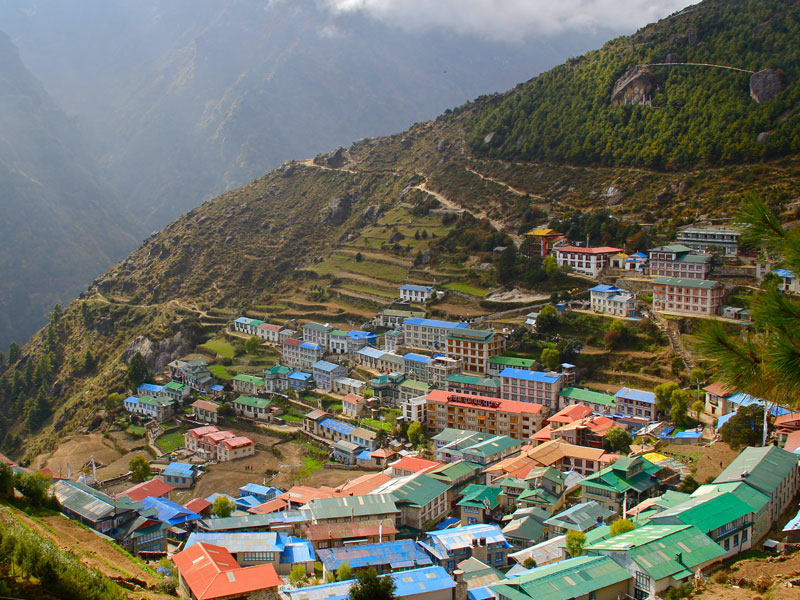
Trek Thame to Namche Bazaar (3440m) The trail descends gently for early one hour to Sanasa (3550m). Now you have a glimpse of first really good views of the great peaks of the Khumbu including Mt Everest, Nuptse, Lhotse, Ama Dablam, Thamserku and Kusum Kangaru. Passing by several villages and numerous teashops, the trail descends steeply to a bridge over the river Dudh Koshi at Phunki Tenga (3250m.) Although exhausting due to the zigzag path, the trek has numerous attractions like rhododendron bushes, beautiful birds chirping and superb mountain scenery making your trek exciting. Tyangboche is famous Passing by several villages and numerous teashops, the trail ascends steeply to Sanasa where local Sherpa people sell the Tibetan goods. The way from Sanasa to Namche has small ups and downs with view of forests, scenery and mountains.
Trek from Namche Bazaar to Phakding (2652m) and it takes about 4 hours. The trails descend steeply for early one and half hours. After that, the path has small ups and down to Phakding through Monjo.
Trek from Phakding to Lukla (2800m) and it takes about 3 hours. Your final day’s trekking follows the Dudh Kosi back down to Lukla. This last evening in the mountains is the ideal opportunity for a farewell party with the Sherpa guides and porters, where you can sample some chhang, try Sherpa dancing and look back on a memorable trekking experience.
Fly from Lukla to Kathmandu. You take an earl y morning flight back to Kathmandu.
This is the free day and you can use it for your shopping. In the evening we will drive you for farewell dinner with cultural dance.
All too soon it’s time to bid Nepal farewell and one realizes that we can never be intimate, only acquainted with this amazing adventure kingdom.
Includes/Excludes
Cost Includes
- Airport Pick up & Drop Transportation by private vehicle
- Twin sharing accommodation at Kathmandu in 2 star to 5 star hotels with breakfast
- Sightseeing in Kathmandu Escorted with English Speaking Guide & Entrance fee
- Kathmandu Dolakha Transportation in local or private
- Lukla Kathmandu flight fare for member and 2 nepali staff
- Cargo cost
- Accommodation in tent during trek
- Meals (Breakfast, lunch, dinner) in trekking
- 4 seasonal sleeping bag
- Trekking map for group
- All necessary paper work & Permits
- National Park Fee
- Experienced cook, sherpas and kitchen crew
- Tents, mattress, cooking utensils and camping equipments
- A First Aid and Eco trained & Government licensed holder English Speaking guide and required Porter
- Accommodation, meals, salary, equipment, transportation & Insurance of Langtang Ri trekking staffs
- Travel & Rescue arrangement
- All government taxes and agency service charge
- Farewell dinner
Cost Excludes
- International Airfare
- Nepal Visa fee (US$ 50 per person for 30 days)
- Airport Departure taxes/Excess baggage charges
- Lunch/Dinner in Kathmandu
- Medical evacuation in case of emergency
- Personal gears & clothing (available on hire)
- Client's insurance, Items of personal nature i.e. Soft/hard drinks, Tips etc
- Expenses incurred due to mishaps, landslide, strikes, political unrest etc. In such case extra will be charged as per actual
- Anything not specified in cost include section
Fixed Departure
Fixed Departure Dates for 2025
- Spring Season:
- Departure: March 10, 2025 | Arrival: April 3, 2025
- Departure: April 5, 2025 | Arrival: April 29, 2025
- Departure: May 1, 2025 | Arrival: May 25, 2025
- Autumn Season:
- Departure: September 10, 2025 | Arrival: October 4, 2025
- Departure: October 5, 2025 | Arrival: October 29, 2025
- Departure: November 1, 2025 | Arrival: November 25, 2025
Map

Essential information
The Rolwaling Trek via Tashi Lapcha Pass is one of Nepal’s most challenging and rewarding trekking routes, offering an exceptional mix of natural beauty, cultural immersion, and extreme adventure. Nestled in the eastern region of Nepal, this trek takes you through the remote and pristine Rolwaling Valley, crossing the formidable Tashi Lapcha Pass (5,755 meters), and eventually connecting to the Khumbu region, home to the iconic Everest Base Camp. Here’s a comprehensive overview of the essential aspects of this trek:
Geography and Highlights
- Rolwaling Valley: Often referred to as the “hidden valley,” Rolwaling lies between the Everest and Langtang regions. It’s surrounded by breathtaking peaks, including Gaurishankar (7,134 meters), Melungtse (7,181 meters), and Chekigo (6,257 meters).
- Tashi Lapcha Pass: A high-altitude pass that requires technical climbing skills and proper acclimatization. The pass is known for its panoramic views of the Rolwaling and Khumbu mountain ranges.
- Trakarding Glacier and Drolambu Glacier: These glaciers are part of the route leading up to Tashi Lapcha, offering challenging yet stunning landscapes.
- Cultural Encounters: The trek passes through Sherpa and Tamang villages, where trekkers can experience traditional lifestyles, Buddhist monasteries, and unique local customs.
Physical Demands and Technical Requirements
This trek is not for beginners. It’s classified as a strenuous and technical trek due to the combination of:
- High Altitude: The route climbs above 5,000 meters multiple times, posing risks of altitude sickness.
- Technical Climbing: Crossing Tashi Lapcha Pass requires the use of climbing gear such as crampons, harnesses, and ropes. Previous mountaineering experience or guidance from a skilled climbing guide is essential.
- Remote Terrain: The rugged and isolated trails demand excellent physical fitness, mental resilience, and self-sufficiency.
Best Time to Trek
The best seasons for the Rolwaling Trek are:
- Spring (March to May): Favorable weather conditions with blooming rhododendrons and clear mountain views.
- Autumn (September to November): Crisp air and stable weather, making it ideal for high-altitude crossings.
Winter and monsoon seasons are less favorable due to heavy snowfall and rain, which can make the trails dangerous and the pass nearly impassable.
Permits and Regulations
Trekking in the Rolwaling region requires several permits:
- Restricted Area Permit (RAP): Required for entry into the Rolwaling Valley.
- Sagarmatha National Park Permit: Necessary for entering the Khumbu region after crossing Tashi Lapcha.
- TIMS (Trekkers’ Information Management System) Card: For safety and record-keeping purposes. These permits can be arranged through a registered trekking agency in Nepal.
Wildlife and Biodiversity
The Rolwaling Valley is rich in biodiversity. Trekkers may encounter:
- Flora: Alpine forests of pine, juniper, and rhododendron dominate lower altitudes, while higher elevations are home to sparse vegetation and lichens.
- Fauna: Himalayan tahr, snow leopards, red pandas, and a variety of birds, including pheasants, are found in the region. This rich biodiversity is protected within the Gaurishankar Conservation Area and Sagarmatha National Park.
Accommodation and Food
- Tea Houses: Basic tea house accommodations are available in lower altitudes. As you ascend, facilities become more limited.
- Camping: Due to the remoteness and lack of infrastructure near the Tashi Lapcha Pass, camping is necessary in several sections. Trekkers should be prepared with proper camping gear and supplies.
- Food: Meals typically consist of dal bhat (lentils and rice), noodles, potatoes, and soups. Packaged snacks and high-energy foods are recommended for the higher, less-serviced areas.
Key Challenges
- Altitude Sickness: Proper acclimatization is crucial to avoid Acute Mountain Sickness (AMS). Trekkers should ascend gradually and stay hydrated.
- Weather Conditions: Unpredictable weather at high altitudes can result in extreme cold, snowstorms, and reduced visibility.
- Technical Skills: Crossing glaciers and the pass demands climbing proficiency and familiarity with mountaineering equipment.
- Logistical Complexity: Organizing gear, permits, and supplies for such a remote trek requires careful planning and often professional support.
Cultural Significance
- Buddhist Influence: The region is deeply rooted in Tibetan Buddhism, evident in its monasteries, prayer flags, and chortens.
- Sacred Peaks: Gaurishankar is considered sacred in both Hindu and Buddhist traditions.
- Local Communities: Interacting with the warm and hospitable Sherpa and Tamang people provides insight into their rich cultural heritage and resilience in this harsh environment.
Essential Preparations
- Fitness Training: Cardio, strength training, and endurance exercises are essential to prepare for the trek.
- Technical Gear: Ensure you have crampons, ice axes, ropes, helmets, and harnesses. If you lack experience, hire a professional guide.
- Clothing: Layered clothing, waterproof gear, and insulated jackets are a must.
- Medical Kit: Include altitude sickness medication, basic first aid, and personal prescriptions.
- Insurance: Comprehensive travel insurance that covers high-altitude trekking and emergency evacuation is mandatory.
Ethical and Environmental Considerations
- Leave No Trace: Minimize your environmental footprint by avoiding littering and respecting local customs.
- Support Local Communities: Stay at locally-run tea houses and hire local guides and porters to contribute to the local economy.
- Respect Wildlife: Maintain a safe distance from animals and avoid disturbing their habitats.
Connectivity and Accessibility
- Getting There: The trek typically starts in Shigati or Gongar, which are accessible by road from Kathmandu. The trail ends in the Khumbu region, where Lukla provides the nearest airport for flights back to Kathmandu.
- Communication: Mobile networks are sparse and unreliable. Satellite phones or communication devices are recommended for emergencies.
The Rolwaling Trek via Tashi Lapcha Pass is a journey of a lifetime, combining raw adventure, cultural richness, and unspoiled natural beauty. While the challenges are significant, the rewards—both personal and scenic—are unparalleled for those who dare to venture into this remote and mystical corner of the Himalayas.
Equipment Checklist
Equipment Checklist
- Climbing Gear: Harness, crampons, ice axe, ropes, carabiners, and helmets.
- Clothing: Thermal base layers, fleece jackets, insulated down jackets, waterproof shell jackets and pants, gloves, and warm hats.
- Footwear: Sturdy trekking boots, gaiters, and warm socks.
- Camping Gear: Lightweight tents, sleeping bags (rated for -20°C or lower), and sleeping mats.
- Navigation Tools: Maps, GPS devices, or a compass.
- Cooking Supplies: Portable stove, fuel, utensils, and lightweight cookware.
- Food: High-energy snacks, dehydrated meals, and electrolyte supplements.
- Hydration: Water bottles, purification tablets, or filters.
- First Aid Kit: Bandages, antiseptic, altitude sickness medication, pain relievers, and personal prescriptions.
- Miscellaneous: Sunglasses, sunscreen, lip balm, trekking poles, headlamp with extra batteries, and a multi-tool.
Ethical and Environmental Considerations
- Leave No Trace: Minimize your environmental footprint by avoiding littering and respecting local customs.
- Support Local Communities: Stay at locally-run tea houses and hire local guides and porters to contribute to the local economy.
- Respect Wildlife: Maintain a safe distance from animals and avoid disturbing their habitats.
Connectivity and Accessibility
- Getting There: The trek typically starts in Shigati or Gongar, which are accessible by road from Kathmandu. The trail ends in the Khumbu region, where Lukla provides the nearest airport for flights back to Kathmandu.
- Communication: Mobile networks are sparse and unreliable. Satellite phones or communication devices are recommended for emergencies.
Frequently Asked Questions (FAQs)
- How difficult is the Rolwaling Trek via Tashi Lapcha Pass? This trek is highly challenging due to high altitudes, technical climbs, and remote terrain. It’s suitable for experienced trekkers and climbers.
- Do I need previous climbing experience? Yes, crossing Tashi Lapcha Pass requires technical climbing skills. Beginners should hire a professional guide.
- What permits are required for this trek? Restricted Area Permit (RAP), Sagarmatha National Park Permit, and a TIMS card are mandatory.
- Can I do this trek solo? Solo trekking is not recommended due to the technical and remote nature of the route. Group treks with guides are safer.
- What is the best time to undertake this trek? Spring (March to May) and autumn (September to November) offer the best weather and trail conditions.
- How long does the trek take? The trek typically takes 18 to 21 days, depending on acclimatization and weather conditions.
- What kind of accommodation is available? Tea houses are available at lower altitudes, but camping is required in remote sections near the pass.
- Is altitude sickness a concern? Yes, the trek involves high-altitude zones. Proper acclimatization and hydration are essential.
- Are porters and guides necessary? Hiring porters and guides is highly recommended for logistical support, safety, and navigation.
- What wildlife might I encounter? The region is home to Himalayan tahr, snow leopards, red pandas, and various birds such as pheasants.
FAQs
The trek typically lasts 14–16 days and is considered challenging, suitable for experienced trekkers with good fitness and prior high-altitude trekking experience.
Inclusions usually cover accommodation in tea houses or tented camps, meals during trekking, experienced guides and porters, trekking permits, and transportation from Kathmandu to the trailhead.
International flights, travel insurance, personal expenses, tips, optional activities, and meals not mentioned in the itinerary are not included.
The best seasons are March to May (spring) and September to November (autumn) for clear skies, stable weather, and optimal mountain views.
Trekkers cross the Tashi Lapcha Pass (~5,755 m). Proper acclimatization is essential to prevent altitude sickness.
Yes, due to high altitudes, challenging terrain, and glacier crossings, this trek is recommended for experienced trekkers. Beginners with excellent fitness may attempt it with a professional guide.
Accommodation is in tea houses in the lower Rolwaling Valley and tented camps at higher elevations near Tashi Lapcha Pass.
Yes, full board meals are provided during trekking, including breakfast, lunch, and dinner at tea houses and camps.
Yes, the trek can be undertaken individually or in groups. Guides and porters provide support for safety and logistics.
Yes, the trek can be adjusted for extra rest days, acclimatization, or additional sightseeing in Rolwaling Valley or nearby regions.