Introduction
There are treks in Nepal that eases you into the wilderness; where teahouses are frequent, trails are well-trodden, and wifi passwords are written on chalkboards in the local bar. But Dhaulagiri Circuit is none of those things. This remote, camping-intensive route circles the seventh highest Mountain in the world and offers a unique insight into the kind of untouched Himalayan landscapes that have since been designated as one of the last wilderness area in the Himalaya.
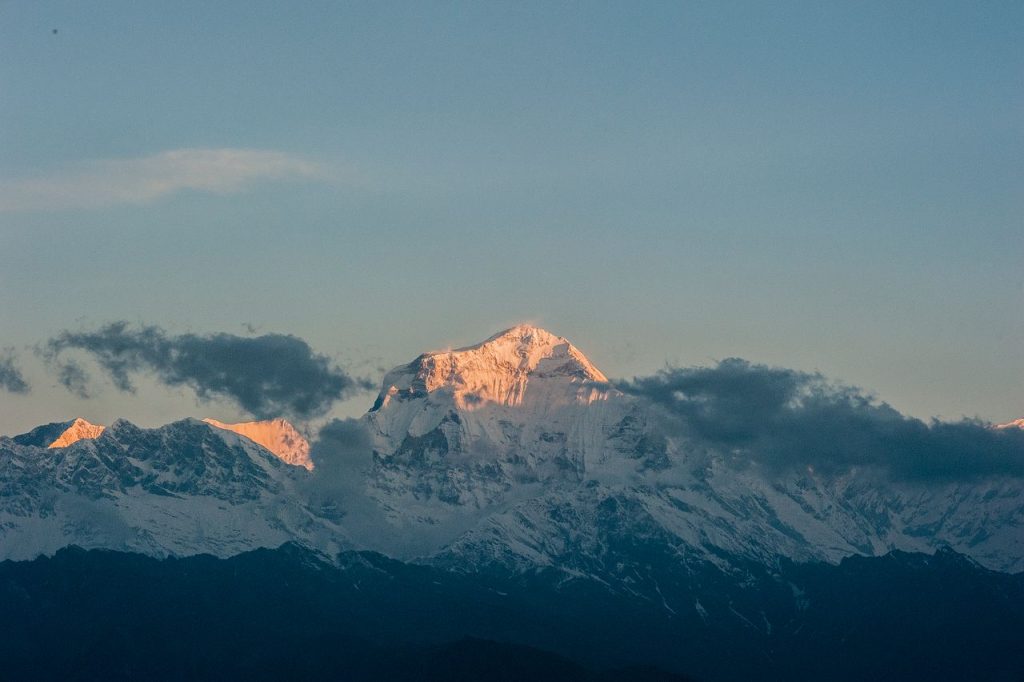
Standing at an intimidating 8,167 Meters, Mount Dhaulagiri I rises from the Kali Gandaki valley – one of the deepest gorges in the world. Dhaulagiri means ‘white mountain’ in Sanskrit, which isn’t difficult to believe when seeing this majestic Mountain peak rising over Dhaulagiri Base Camp. A circuit trek around this giant requires crossing two passes over 5,000 Meters and goes through several different habitats, ranging from lowland terraced farms near Beni to the isolated rocky steppes of far Mustang. Hiking Dhaulagiri Circuit offers an alternative to the more popular Annapurna Circuit trek.
The trail runs from Beni to Jomsom via the French Pass, taking in the glacial saddle of Hidden Valley, the dramatic drop into the Kali Gandaki Gorge, and Dhampus Pass along the way. This trekking guide covers the Dhaulagiri Circuit’s basic details – what the route entails, the best time to go, and how difficult it is. We will also discuss some insights and what to pack for the Dhaulagiri Circuit trek, from permits and costs to why it’s one of the best circuit hikes in Nepal.
Why the Dhaulagiri Circuit Is Different?
Most of Nepal’s classic hikes have been ‘developed’ into multi-day routes with teahouses, bakeries and mobile phone coverage – even the Annapurna Circuit before the road was built is now fairly well-traversed. The Dhaulagiri Circuit is notable for resisting such development – so far – due primarily to the dangers and challenges of the route beyond the Italian Base Camp and across the glaciers. For this reason, the Dhaulagiri Circuit trek is not for the unprepared or the faint-hearted. It is a true camping trek involving crossing two passes over 5000 meters with only a few days to acclimatize. This trek is challenging before you even get to the passes: each day’s hike can take between 6-8 hours with heavy packs carrying your food, cooking gas and other camping supplies.
Another thing that will test you on the Dhaulagiri Circuit is the lack of amenities. There is little to no infrastructure beyond the Italian Base Camp, which means you have to bring everything you need with you – including any food and hot drinks once your camp kitchen is set up. As for what you will be rewarded with on this trek, the towering 8167 meter peak dominates the Annapurna Conservation Area, and the circuit around it is challenging but rewarding. This trek usually takes between 14 and 16 days to complete, although some operators offer longer itineraries that include extra days for acclimatization and/or extra sightseeing and hiking opportunities, which can extend the trip to last up to 20 days.
The Lower Trail: Beni to the Forests
The trek usually begins in Beni, a busy market town approached by road from Pokhara at the confluence of the Myagdi Khola and the Kali Gandaki rivers. From there, it follows the Myagdi Khola up through a series of villages (Babiyachaur, Muri, Boghara) situated along this river valley and populated mainly by Magar and Gurung people. Terraced fields of millet and corn cling determinedly to the hillside on the way up to the first stop in a long trek to the clouds.
These early days’ walking are relatively easy, a chance to loosen up and acclimatize before the more strenuous parts further up. At first, the trail winds through a succession of forests of subtropical and temperate vegetation – rhododendron, oak and bamboo – with exhilarating views of waterfalls cascading down ravines to the river far below, and an appearance of entering the upper reaches of the valley where the mountains take on a more commanding view.
Into the Alpine Zone
Past Boghara, the trail begins to climb and the villages start to dwindle. You pass through Dobang and then into more distant and wilder and wilder landscape until you begin to climb with intent up the mountain’s southern flank. The trail winds up and through forests and into alpine meadows and then through rock and moraine, signaling that this trek is no longer a cultural walk through the Nepali hills, but rather a true mountaineering approach to the lower reaches of the great 8,000 meter peak.
Italian Base Camp, at roughly 3,660 meters, is typically the last camp before the trail finds its way up into the Chonbarden gorge and the glacier proper, with the route varying yearly based on how far and where the glacier has retreated. This area sees the most technical trekking of the expedition with the likes of rocky scree slopes, moraine crossing, and exposed ridge lines all offering their own unique challenge to this unique Himalayan experience, while providing the hiker or climber with the feeling that they are approaching from directly underneath the great peak itself, rather than alongside it.
Dhaulagiri Base Camp and the Approach to French Pass
The trail eventually reaches Dhaulagiri Base Camp at approximately 4,750 meters, offering some of the most incredible views found on the trek. Surrounded on almost all sides by the great Dhaulagiri massif, including the towering peak of Dhaulagiri I and its satellites, as well as the sweeping glacier, Dhaulagiri Base Camp provides a 360 degree view of sheer ice walls and hanging seracs that can’t be found anywhere else on the trek.
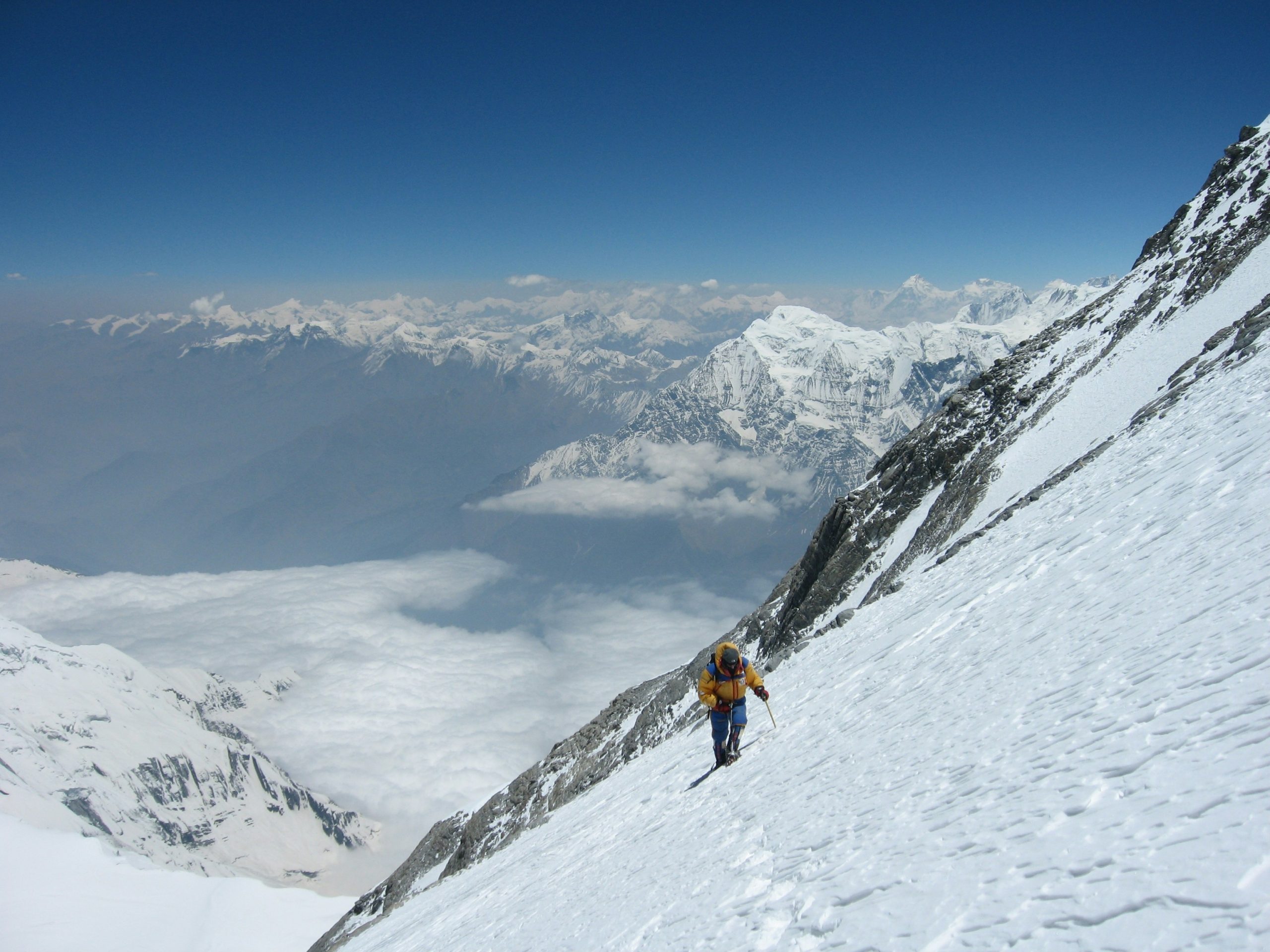
A few days are typically spent acclimatizing in this region, and they are essential to the success of the trek as both the trekking group as well as the employed guide service (if any) will need to be properly conditioned for the next leg in the journey: crossing the French Pass. Therefore, these days are also often spent doing a short jaunt toward the pass to scout out the trail conditions, and also for the trekking group to do some practice with snow climbing gear if any of them lack the mountaineering experience expected for this grade of adventure travel. A basic level of mountaineering skill is expected for these types of expeditions, as some of the passes reached in this region will require some knowledge of technique with regard to ice axes and crampons, and as such, it would be wise to take advantage of these days to ensure that everyone is up to the task at hand.
French Pass: The Trek’s First Great Challenge
The trail crosses the French Pass at roughly 5,360 meters before reaching the Hidden Valley on the other side, where the group will spend two nights in a large alpine basin known as the Hidden Valley. Different outfitters will offer subtly different numbers for this pass based on the GPS tracking devices used, with some crossing at 5,360 meters and others finding themselves at 5,365, but regardless, crossing the French pass is a true Himalayan adventure. The pass itself is a long one, and it typically takes most of the day to reach with a good head of steam, and is best attempted at the beginning of the trekking season when conditions are at their softest.
The reward for reaching the other side is a view of the Hidden Valley, which stretches out before the group like something out of the Tibetan Plateau. This high altitude valley is a stark contrast to many of the other areas found on a regular trekking circuit in Nepal, and is surrounded on all sides by great peaks, including the snow capped Boudha Himal at 6,672 meters, as well as Himal Chuli to the west and Ganesh Himal and Sringi Himal to the north (exact visibilities will change depending on ones position within the valley). The feeling of isolation within this great basin, ringed in mountains, offers a unique insight into why this valley remains so well hidden from most who dare to venture near it.
Hidden Valley and Dhampus Pass
After spending a full day wandering the wonders of the Hidden Valley, the trail eventually winds back uphill toward the Alu Bari village via the Dhampus Pass – a pass that is considerably shorter in distance than French Pass, but much more similar in terms of difficulty. With many sources citing the crossing height to be somewhere between 5,200 and 5,244 meters, with variations seen between them, Dhampus Pass also falls within the realm of High Mountain Passes and as such, should be treated with the same respect as its higher, but slightly more famous counterpart. Descending from the pass toward Yak Kharka at roughly 3,680 meters takes between five to six hours and sees the group back in more hospitable terrain – but this decrease in altitude comes with its own unique set of rewards.
With regard to these descents, it is common for trekkers to report that they are some of the best parts of the entire expedition. Not only do you get to see some of the most breathtaking scenery found in the entire region, but you also get the additional thrill of descending from some truly remarkable heights. The oxygen levels begin to rise again as you drop below 5,000 meters and the cold alpine winds begin to lose their bite, while the colors of the landscape slowly transition from the greys and whites of the glacial rock and snow into the more familiar brown and green of the lower valleys. Down to Jomsom and the Kali Gandaki.
The final days bring trekkers down through Yak Kharka and onward toward Marpha and Jomsom, in the heart of the Kali Gandaki valley — technically part of the Mustang region, and a dramatic contrast to everything that came before. Here the trail meets civilization again: teahouses, apple orchards, the famous Marpha distilleries, and the wide, windswept gorge that separates the Dhaulagiri and Annapurna massifs. Many trekkers choose to fly out from Jomsom back to Pokhara, while others continue on foot to join sections of the classic Annapurna Circuit.
The transition from ice axe and crampons to apple brandy and guesthouse dal bhat within the space of two or three days is, for many, one of the most memorable aspects of the entire trip — a reminder of just how much variety Nepal’s geography packs into a relatively small area.
Difficulty: Is the Dhaulagiri Circuit Worth It?
The Dhaulagiri Circuit is one of those treks in Nepal that you cannot consider for a moment if you are thinking of a first-time trekking experience; this region has a reputation for being one of the most challenging ones in Nepal, and almost all operators that offer this tour list it as the most difficult one in their catalog; some of them score it as the most challenging (5/5) .
There are several reasons why it is considered as such:
Altitude: Ascents are rather high, meaning that most of the nights during the tour will be spent at over 3,500m, which brings an additional challenge of possible altitude-related illnesses , in addition to potential high-altitude cerebral edema, and high-altitude pulmonary edema that can also occur if the acclimatization is not handled correctly. These conditions, in addition to typical acute mountain sickness, are some of the most common reasons why this trek is considered dangerous .
The terrain: Steep, rocky, snowy, and slippery parts of the trail sum up to an additional challenge presented by the trail , and a particularly difficult section is presented by the area near French pass and Dhampus pass, where large rocks had to be moved, narrow rocky inclines had to be climbed, and large streams had to be crossed .
Technical skills: The trek requires that a trekker has had at least some technical climbing skills (ice axe and crampons) to be able to handle the higher ground on the way to Jomsom , while most operators that offer this tour provide for a short training session at Base Camp for those who did not have prior experience with technical climbing.
Fitness: This trek is not something that can be done in one’s spare time, with daily hikes only lasting from 6h to 8h , with most of them having a significant incline to reach the next campsite. In addition to having to be in good shape and able to hike for 6-7h at a time on relatively demanding trails, it is important to have either had prior trekking experience or at least some mountaineering skills .
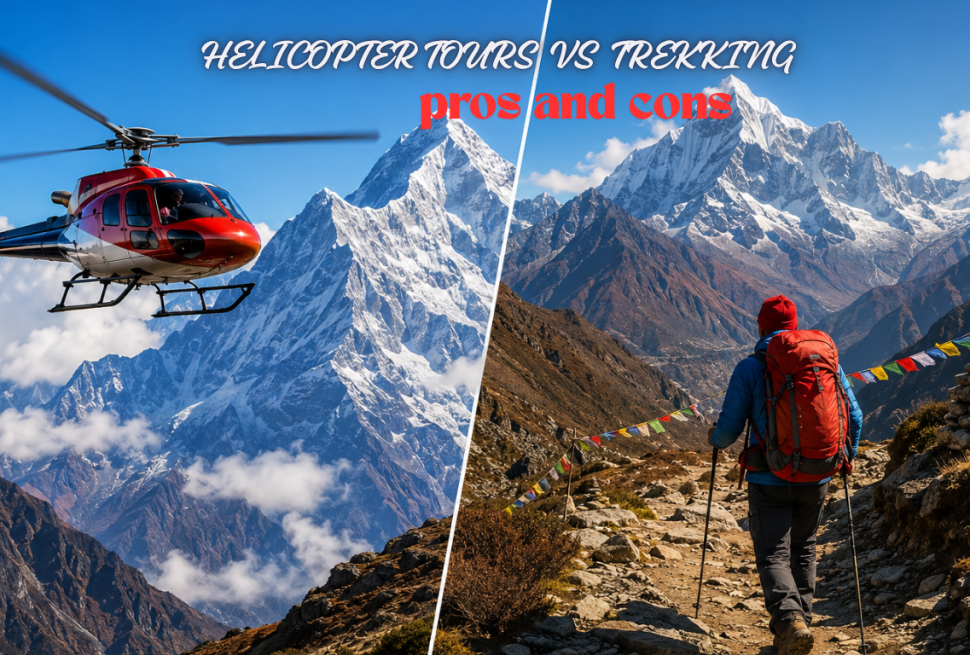
Remote area / camping: Due to this being a mostly camping trek, with only a few tea houses along the way, it is important to understand that if something goes wrong, it will not be possible to just cut the trek short and go back to civilization if something goes wrong; the only realistic form of rescue is by helicopter , and, depending on the part of the trek that something went wrong, it may not even be quick.
The point of this list is not to scare you off, necessarily; there are thousands of people who do this trek every year, and most of them would not consider themselves to have had much experience with higher altitude treks before doing the Dhaulagiri Circuit. However, it is important to keep in mind that there is a certain level of skill and preparation needed before embarking on a journey like this, as well as a trustworthy company to rely on in case something goes wrong .
Best Time Period to Trek the Dhaulagiri Circuit
The time period during which the best conditions for trekking are offered is significantly more important, in the case of this circuit, than for most other treks in Nepal, due to the precariousness of the high parts of the trail.
The most favorable time period for trekking in general in Nepal is considered to be autumn (September – November) and spring (April – May), and for Dhaulagiri Circuit, in particular, so this should be strongly considered while planning your adventure .
However, a word of caution must be said regarding trekking during the winter season in these regions. There were cases of significant issues occurring among trekkers who decided to try the Dhaulagiri Circuit during the winter season in recent years, and this trek is generally not advised anywhere near the winter period .
The main reason for this is the extreme cold and high chances of snowstorms occurring during the season, along with the overall lack of protection in the region, meaning that the winter season adds considerable danger to the trek. It is also significantly more difficult to predict the weather in this region, as there are no weather stations on Dhaulagiri, and due to the nature of the trek, which involves a lot of hiking at drastically different altitudes, there are significant variations in temperature throughout the journey; the weather at the base camps, in particular, can be particularly unpredictable, with cold periods occurring on a daily basis in the afternoon .
Experienced guides mitigate this factor, among other things, by planning the route in such a way that the group is off the higher, colder parts of the trail before the afternoon winds start, and by choosing the campsites wisely, with regard to their protection from the wind. As such, it is generally advised to plan the trek on either spring or autumn, with the former generally being more recommended due to higher chances of clear weather and beautiful sights.
Sample Itinerary
Itineraries vary somewhat by operator, with total trip length commonly ranging from around 15 to 20 days depending on how many acclimatization days, rest days, and buffer days for weather are built in. A representative structure looks something like this:
Days 1: Kathmandu arrival . Overnight in Hotel (1,300m)
Day 2 : Kathmandu sightseeing Overnight in Hotel (1,300m)
Day 3 : Kathamandu to Pokhara Drive (900m)
Day 4 : Drive from Pokhara to Dharapani via Beni (1,860m)
Day 5 : Trek from Dharapani to Muri (1,720m)
Day 6 : Muri Village to Boogara (2,080m)
Day 7 : Boogara to Dobhan (2,520m)
Day 8 : Dobhan to Salla Ghari (3,445m)
Day 9 : Salla Ghari to Italian base Camp (3,660m)
Day 10 : Acclimatisation day at Italian Base Camp (3,660m)
Day 11 : Italian Base Camp to Japanese Camp (3,890m)
Day 12 : Japanese Camp to Dhaulagiri Base Camp (4,750m)
Day 13 : Dhaulagiri Base Camp to Hidden Valley (5140) via French Pass (5360m)
Day 14 : Hidden Valley to Yak Kharka via Thapa Pass/Dhampus Pass (5244m) (4,800m)
Day 15 : Yak Kharka to Marpha Village (2,670m)
Day 16 : Drive to Jomsom. Fly to Pokhara. Overnight in Hotel (900m)
Day 17 : Drive from Pokhara to Kathmandu. Overnight in Hotel (1,300m)
Longer itineraries simply add extra buffer days — invaluable insurance against bad weather pinning the group down at a pass, which happens often enough that most experienced operators consider buffer days close to essential rather than optional.
Permits and Costs
Because of the Dhaulagiri Circuit’s pass through the Annapurna Conservation Area, standard permits include the Annapurna Conservation Area Permit (ACAP) and a TIMS (Trekkers’ Information Management System) card. Due to the circuit’s remoteness, it’s vital to note that independent travel on the Dhaulagiri Circuit is disallowed – only registered trekking agencies may organize travel on this route, which will also take care of far more involved logistics than other trekking permits in Nepal: guides, porters, camping gear, food for two or three weeks.
In terms of costs, this is one of the most expensive trekking adventures in Nepal for its distance due to those camping-related logistics, with prices starting at around USD 5,365 for a 20-day circuit according to established operators . It’s crucial to note, however, that costs vary greatly depending on the operator, group size, how many extra services are utilized (e. g. private guide ratios, extra acclimatization days, helicopter evacuation insurance), and what those extra services entail. In many cases, it’s more informative to compare what services are included in a price rather than prices for the same services, as the range there can also be considerable depending on the company.
What to Pack?
- Due to its high altitude and camping conditions, the Dhaulagiri Circuit’s packing list features more items in most categories than other trekking circuits in Nepal. Among the essentials:
- Four-season sleeping bag with liner: the temperatures at night can be near freezing at the passes, and significantly lower otherwise
- Insulated layers: down jacket, insulated pants, and other clothing to stay warm and dry while camping at such altitudes is a necessity
- Mountaineering: trekking poles are obligatory, and companies usually provide crampons, an ice axe, and tuition for their use at the passes
- Clothing: closed and rigid boots are the most important item here, as hikers will have to deal with glaciers and snow on the way, making standard trekking shoes inadequate
- Daypack: a daypack, a rucksack, or a backpack for light items needed at the campsites – warm clothes, a jacket, a camera, water, a personal medicine kit, and some snacks, with a 5 kg weight limit since most gear and food will be provided by the company
- Sun protection: UV exposure at such altitudes is nearly unforgiving, so glacier glasses or high-category sunglasses, sun cream, and lip salve are obligatory
- Water: a good water filter is a necessity, as is a supply of purification tablets for the rare occasions when water might be needed
- Medicine: personal medications, first-aid supplies, and medication for blister care. For high altitudes, a discussion with a physician about drugs to prevent or mitigate acute mountain sickness (the most common altitude-related illness) can help decide if acetazolamide is needed during the trek, and its dosage.
- Most operators also have a satellite phone on hand for emergencies, along with a personal medical kit and, for the more competitive ones, an oximeter to test blood oxygen levels at altitude – it’s worth asking specifically when comparing operators.
Health, Safety, and Acclimatization
It’s hard to overestimate the importance of acclimatization on the Dhaulagiri Circuit since the trek goes through regions over 4,000 and even 5,000 meters above sea level. Altitude-related illnesses (the most common one being AMS or acute mountain sickness) are the most dangerous potential hazard on the Dhaulagiri Circuit, and the primary reason for the itinerary’s design – the extra days spent at Dhaulagiri Base Camp acclimatizing before the push towards the passes are essential. Skipping or reducing them in order to save time is one of the most frequent and most dangerous mistakes made by Dhaulagiri Circuit trekkers. Ascents should be slow and deliberate whenever possible, and extra acclimatization days should be used when necessary for safety, even if that adds days and cost to the trek.
Symptoms of AMS include headaches, nausea, lack of appetite, sleep disturbances, and dizziness – and should never be downplayed or ignored. The most crucial rule for dealing with altitude sickness is to descend until symptoms subside, not try to mitigate them with drugs or push through.
A good travel insurance policy, covering altitude-related illnesses and helicopter evacuation, is obligatory for the Dhaulagiri Circuit. Due to its remoteness, helicopter evacuation from the region is the only viable option for emergency medical assistance, which is not only time- and scare-consuming but also extremely costly without the appropriate insurance.
Choosing a Guide and Trekking Company
Due to the high difficulty of the terrain, extreme altitudes, and camping-specific logistics, it’s unwise to attempt the Dhaulagiri Circuit independently – most seasoned trekkers travel on it as a group with a guide and a porter. When choosing an operator, it’s crucial to ask about the following considerations:
The experience of the guides in particular on the Dhaulagiri Circuit, not just trekking in general, since the glacier and the route can change substantially from year to year
The group size and guide-to-trekker ratio, to estimate the potential safety and comfort of the trek
What equipment is standard, such as satellite phones, oxygen bottles or tanks, medications and pulse oximeters, and the specifics of emergency evacuations
How many acclimatization, buffer, and optional days are included in the standard itinerary vs extra ones
The specifics of what’s included and not included in the price, particularly permits, personal insurance, guide and porter equipment, and extra services
A more expensive, but smaller group, more experienced guides on the Dhaulagiri Circuit in particular, and more acclimatization days built into the schedule are, in most cases, better choices for such a demanding trek.
Why Trekkers Keep Coming Back?
Ask a trekker who completed the Dhaulagiri Circuit about their experience, and they will most likely tell you about the scale: the scale of the mountains and glaciers, the scale of the valleys and the sky above them, the scale of their own accomplishments at the end of the trek. Ask them about the particular moments that stick to their being, and it will most likely be the sight of an 8,000-meter peak rising right before them while at the Dhaulagiri Base Camp, the eerie silence of Hidden Valley, the struggle and the euphoria of getting to the French Pass summit, and the relief and new sensations at the Marpha apple orchards at the end of the trek, after weeks of camping at the mountainside.
Ask those who completed the Dhaulagiri Circuit about their feelings, and they will most likely describe a sense of having achieved something much bigger than themselves – and having lived through something that few others could say the same. After reading about the Dhaulagiri Circuit’s requirements and challenges, it’s not surprising that these feelings are tied to the trek: it is a tough, multi-week endeavor that asks a price in discomfort for some incredible sights, but also tests one’s perseverance, both physical and mental, and teaches valuable lessons about nature and mountains. I have included Age of Himalayas as a suggested option in the closing paragraph. One comment before you publish: I don’t have independent information about this particular agency’s reputation, so it would be good to do some further research on this particular company before posting this, as you emphasize choosing the tour operator with a good reputation for that particular route.
Final Thoughts
The Dhaulagiri Circuit is not a trek for the unprepared, the underestimating, the ill-equipped, or the inflexible. It requires a certain level of physical fitness, a certain degree of realism about the dangers of altitude, a competent local guiding staff, and an ability to roll with the inevitable delays necessitated by the challenges of hiking at five thousand meters. But for those willing to put in the necessary preparation, including practicing camping (preferably in difficult terrain) and finding a trekking agency that takes acclimatization seriously, the circuit offers a unique opportunity to experience one of the most breathtaking high-altitude trails in the Himalaya – if not the most authentic, given the relative lack of popularity due to its difficulty.
While Everest Base Camp and the Annapurna Circuit are the traditional introduction to trekking in Nepal, the Dhaulagiri Circuit is something different – a return to the wilderness, to a more primitive and occasionally intimidating form of Himalayan exploration that few have undertaken. This trail is best suited for those who want to challenge themselves beyond the comforts of tea houses and have an authentic, if arduous, Himalayan experience. Standing in Hidden Valley, surrounded by silent peaks of six and seven thousand meters, with only the wind and the looming Dhaulagiri somewhere above and beyond the ridge, is an experience that cannot be described in words and should not be missed by anyone with even a passing interest in trekking and mountain climbing. Therefore, for those wishing to attempt the Dhaulagiri Circuit, it is recommended to seek advice from agencies that specialize in this particular trek, consult a physician if there are any doubts about fitness, and plan the trip around additional acclimatization days, which should always be built in, rather than used, on such an endeavor.